

Advanced Search Results
Refine your search by using the category filter.

Bittering agent for toxic products, repels animals and creates unpleasant taste.


Denatonium Saccharide
Denatonium Saccharide is a chemical compound commonly used as a bittering agent in various products such as household cleaning agents, pesticides, and personal care items. It is a combination of Denatonium and Saccharide, which makes it highly effective in preventing accidental ingestion of harmful substances. Denatonium Saccharide is known for its extreme bitterness, making it virtually impossible to consume even in small amounts. This compound has been approved by regulatory agencies around the world for its safety and efficacy, and it is widely used in the industry to protect consumers from accidental poisoning.
Product Specifications:
| Ingredient Name | Description |
| Denatonium Saccharide | A bittering agent used to discourage the ingestion of harmful substances |
| Saccharide | A type of sugar |
| Denatonium | A bittering agent used to discourage the ingestion of harmful substances |
Similar Products
- Denatonium Benzoate
- Bitrex
- Thiourea
- Quinine
- Chloroquine
Note: These are similar products, and each product is different, so research is required to find the best fit for your needs.
CAUTION: Denatonium Saccharide may cause irritation or allergic reactions. Handle with care.
Perfect For:
- Manufacturers of bitter-tasting products
- Chemical companies
- Pharmaceutical companies
- Food and beverage companies
- Cosmetic companies
- Animal repellent manufacturers

Manganese Dioxide
Manganese Dioxide is a chemical compound with the formula MnO2. It is a black or brown solid that is commonly used as a pigment and as a precursor to other manganese compounds. Our product contains 80% manganese dioxide, making it a highly concentrated and effective option for various industrial applications. With its excellent oxidation properties, it is commonly used in the production of batteries, ceramics, and glass. Additionally, manganese dioxide has been found to have potential benefits in water treatment and as a catalyst in chemical reactions.
Product Specifications:
| Product Name | Manganese Dioxide |
| Dioxide Content | 80% |
| Manganese Content | Manganese Dioxide |
| Additional Specifications | 80% Manganese Dioxide |
Perfect For:
- Chemical manufacturers
- Pharmaceutical companies
- Battery manufacturers
- Ceramics industry
- Iron and steel industry
- Water treatment plants

 For MSDS Go to Downloads Tab
Phenolphthalein 99%
Phenolphthalein 99% is a chemical compound commonly used as a pH indicator in laboratories. Its name comes from the Greek words "pheno" meaning shining and "phthalein" meaning to become pale. When added to a solution, it changes color depending on the pH level. This high purity version of Phenolphthalein is ideal for precise measurements and experiments. It is also used in the production of dyes and pharmaceuticals.
Product Specifications:
| Product Name | Phenolphthalein 99% |
| Chemical Formula | C20H14O4 |
| CAS Number | 77-09-8 |
| Purity | 99% |
| Appearance | White to light pink crystalline powder |
Target Group:
- Chemistry students
- Laboratory technicians
- Researchers in the field of chemistry
- Manufacturers of chemical products
- Pharmaceutical companies
- Scientists in the field of chemistry

Potassium Ferricyanide 99.5%
Potassium Ferricyanide 99.5% is a chemical compound used in various industrial and laboratory applications. It is commonly used as an oxidizing agent and in the production of blue pigments. This high-purity form of Potassium Ferricyanide is ideal for use in sensitive laboratory experiments and processes. With a purity level of 99.5%, it is a reliable and consistent source of this important chemical compound.
Product Specifications:
| Product Name | Potassium Ferricyanide 99.5% |
| Chemical Formula | FeK3(CN)6 |
| Molecular Weight | 329.24 g/mol |
| Appearance | Red to orange crystalline powder |
| Assay | ?99.5% |
Similar Products
- Potassium Ferrocyanide 99.5%
- Sodium Ferricyanide 99.5%
- Potassium Cyanide 99.5%
- Sodium Ferrocyanide 99.5%
- Potassium Permanganate 99.5%
Note: These are similar products, and each product is different, so research is required to find the best fit for your needs.
CAUTION: Potassium Ferricyanide may be harmful if ingested or inhaled. Avoid contact with skin and eyes. Use with proper ventilation and personal protective equipment.
Perfect for:
- Chemical laboratories and research facilities
- Manufacturing companies
- Pharmaceutical companies
- Universities and educational institutions
- Scientists and researchers in the field of chemistry
- Industrial and agricultural businesses

Potassium Ferrocyanide, 99.3%
Potassium Ferrocyanide, 99.3% is a chemical compound that is commonly used as a laboratory reagent. It is a yellow crystalline solid that is soluble in water and has a variety of applications in different industries. This product is composed of 99.3% pure Ferrocyanide, Potassium, making it a high-quality and reliable option for various scientific experiments and processes. Potassium Ferrocyanide, 99.3% is often used in the production of pigments, dyes, and pharmaceuticals. It can also be used as a food additive and is commonly found in salt substitutes.
Product Specifications:
| Product Name | Potassium Ferrocyanide |
| Purity | 99.3% |
| Chemical Formula | FeK4(CN)6 |
| Molecular Weight | 368.34 g/mol |
| CAS Number | 13943-58-3 |
| Appearance | Yellow crystals |
Target Group:
- Chemical manufacturers
- Industrial companies
- Laboratories
- Research institutions
- Pharmaceutical companies
- Chemical distributors

Notice:
Minimum order Quantity is 6 pounds. It may be shipped in 1-lb or 2-lb containers.
Free Local Shipping up to 10 miles from our warehouse in Clifton, New Jersey.
Potassium Hydroxide Flakes
Potassium Hydroxide Flakes, also known as caustic potash, is a highly versatile chemical compound that is widely used in various industrial and laboratory applications. With a purity of 90%, these flakes are ideal for a wide range of uses including soap making, biodiesel production, and as a strong base in chemical reactions. Potassium Hydroxide Flakes are also commonly used in the production of fertilizers, dyes, and pharmaceuticals. Due to its highly corrosive properties, it is important to handle Potassium Hydroxide Flakes with care and follow proper safety precautions.
Product Specifications
| Product Name | Potassium Hydroxide |
| Chemical Formula | KOH |
| Form | Flakes |
| Purity | 90% |
Applications and Benefits:
- Soap making and saponification processes
- Biodiesel production
- Strong base for chemical reactions
- Manufacturing of fertilizers, dyes, and pharmaceuticals
- Suitable for laboratories, research facilities, and industrial plants
Caution:
Potassium Hydroxide Flakes are highly corrosive. Use appropriate personal protective equipment including gloves, eye protection, and protective clothing. Handle in well-ventilated areas. Avoid contact with skin, eyes, and moisture. Store in a tightly sealed container away from incompatible materials. Keep out of reach of children.

Tetrapotassium Pyrophosphate
Tetrapotassium Pyrophosphate, also known as Anhydrous Pyrophosphate, is a chemical compound that is commonly used in the food industry as a buffering agent, emulsifier, and dispersing agent. It is a white crystalline powder that is soluble in water and has a slightly salty taste. Tetrapotassium Pyrophosphate is made up of Tetrapotassium and Anhydrous Tetrapotassium Pyrophosphate, which are both important components in its chemical structure. This compound is known for its ability to prevent the formation of calcium and magnesium deposits in food processing equipment, making it a popular choice for use in the dairy and meat industries.
Product Specifications:
| Product Name | Tetrapotassium Pyrophosphate, Anhydrous |
| Chemical Formula | K4P2O7 |
| Molecular Weight | 330.34 g/mol |
| Appearance | White crystalline powder |
| Melting Point | 1,100 ?C (2,010 ?F; 1,370 K) |
| Solubility | Soluble in water |
| pH Value | 10-11 (1% solution) |
Target Group:
- Chemical manufacturers
- Food and beverage processing companies
- Cleaning product manufacturers
- Pharmaceutical companies
- Research and development laboratories
- Industrial and commercial cleaning services

Tin Oxide
Tin Oxide, also known as Stannic Oxide, Tin (IV) Oxide, Sno2, or 99.8% Oxide, is a chemical compound with the formula SnO2. It is a white, powdery substance that is insoluble in water and has a high melting point. Tin Oxide is commonly used as a polishing agent, as well as in the manufacturing of glass, ceramics, and electronic components. It is also used in the production of solar cells and as a catalyst in chemical reactions. Its high refractive index and transparency make it an important material in the production of anti-reflective coatings for optical lenses.
Product Specifications:
| Product Name | Tin Oxide, Stannic Oxide, Tin (IV) Oxide, SnO2, 99.8% |
| Chemical Formula | SnO2 |
| CAS Number | 18282-10-5 |
| Molecular Weight | 150.71 g/mol |
| Appearance | White powder |
| Melting Point | 1630?C |
| Boiling Point | Unknown |
Note: These are similar products, and each product is different, so research is required to find the best fit for your needs.
Caution: Tin oxide may be hazardous if inhaled or ingested. Use proper personal protective equipment and handle with care.
Perfect for:
- Chemical manufacturers
- Researchers and scientists
- Industrial and manufacturing companies
- Electronics manufacturers
- Pharmaceutical companies
- Environmental testing labs

Ethyl Vanillin (Ethylvanillin)
Ethyl Vanillin, also known as Ethylvanillin, is a synthetic compound that is used as a flavoring agent in various food and beverage products. It is a white to pale yellow crystalline powder with a strong vanilla aroma and taste. Ethyl Vanillin is commonly used as a substitute for natural vanilla extract, as it is more cost-effective and has a longer shelf life. It is widely used in the food industry for products such as baked goods, confectionery, ice cream, and beverages. Ethyl Vanillin is also used in the fragrance industry for its sweet and vanilla-like scent.
Product Specifications:
| Product Name | Ethyl Vanillin (Ethylvanillin) |
| Chemical Name | Vanillin, Ethyl, Ethylvanillin |
| CAS Number | 121-32-4 |
| Molecular Formula | C9H10O3 |
| Molecular Weight | 166.18 g/mol |
| Appearance | White to slightly yellow crystalline powder |
| Odor | Sweet, creamy, vanilla-like |
Perfect For:
- Food and Beverage Manufacturers
- Flavor and Fragrance Companies
- Pharmaceutical Companies
- Cosmetics Companies
- Aromatherapy Enthusiasts
- Baking and Cooking Enthusiasts
Denatonium Benzoate
Denatonium benzoate is a highly effective bittering agent known for its use in preventing accidental ingestion of hazardous substances by humans and animals. It is colorless, odorless, and can render a substance unpalatably bitter with just a minuscule amount. This compound is often used in various household, industrial, and garden products to ensure safety and prevent poisoning.
Key Features
- Most bitter compound known.
- Effectively deters ingestion of harmful substances.
- Colorless, odorless, and water-soluble.
- Widely used in household and industrial products.
- Safe for use around humans and pets.
Product Specifications:
| CAS Number: | 3734-33-6 |
| Molecular Weight: | 446.58 |
Similar Products
- Bitter coating spray for pets
- No-chew bitter formula
- Anti-ingestion nail polish
- Bitter taste deterrent
- Safe chew repellent
Note: These are similar products, and each product is different, so research is required to find the best fit for your needs.
Perfect for: Household safety enthusiasts, pet owners, parents of young children, industrial safety managers, and gardening hobbyists.

Methylene Blue Trihydrate
Methylene Blue Trihydrate, also known as Basic Blue 9 trihydrate, is a fine crystalline powder with the chemical formula C16H18ClN3S . 3H2O. It finds its application in histology, bacteriology (staining), compounding of blood stains, anti-fungus treatment on fish eggs. It can also be used as a protozoacide and a fungicide.
Key Features:
- Used in histology and bacteriology staining
- Effective anti-fungus treatment for fish eggs
- Can be used as a protozoacide and a fungicide
- Chemical formula: C16H18ClN3S . 3H2O
Product Specifications:
| Synonyms | Basic Blue 9, trihydrate; Methelyne blue trihydrate; 3,7-Bis(dimethylamino)phenazathionium chloride trihydrate |
| CAS No. | 7220-79-3 |
| Formula | C16H18ClN3S . 3H2O |
| Appearance | Fine yellow powder |
| Application | Histology, bacteriology (staining), compounding of blood stains, anti-fungus treatment on fish eggs, protozoacide and fungicide. |
Similar Products:
- Toluidine blue
- Crystal Violet
- Safranin O
- Methylene Green
- Wright's Stain
Note: These are similar products, and each product is different, so research is required to find the best fit for your needs.
Caution: Handle with care, may cause skin irritation, harmful if swallowed or inhaled. Keep out of reach of children.
Perfect for histologists, bacteriologists and those in need of anti-fungal treatment for fish eggs.

Sodium Metasilicate Pentahydrate
Sodium metasilicates, METSO PENTABEAD®20, offer the convenience of sodium silicate and sodium hydroxide (caustic soda) in an easy-to-handle, free-flowing bead. Sodium metasilicates are essential ingredients in detergents and cleaning products. They are widely utilized in metal cleaning, industrial and institutional cleaners, textile and food processing industries, and the manufacture of specialty cements used in the drilling industry.
Product Specifications
| Chemical Formula | Na2SiO3·5H2O |
| CAS Number | 6834-92-0 |
| Alternate Name | Disodium Trioxosilicate |
| H2O | 41.52% |
| Na2O | 29.33% |
| SiO2 | 28.52% |
| UN Number | UN3253 |
| Hazard Class/Division | 8 |
| Packing Group | III |
Applications and Benefits:
- Key ingredient in detergents and cleaning products
- Metal cleaning and industrial cleaners
- Textile and food processing industries
- Manufacture of specialty cements for drilling
Caution:
Subject to hazardous material charges by the carrier. Regulated for transportation under UN3253 as Disodium Trioxosilicate. Handle with care and follow appropriate safety guidelines. Pallet quantities typically ship in 7 to 10 days.

Triethanolamine
Triethanolamine, commonly known as TEA, is a colorless liquid that is widely used in numerous industries for different purposes. It is commonly used as a surfactant, emulsifier, and pH adjuster in cosmetics, personal care products, and cleaning products. Additionally, TEA is used in the production of detergents, textiles, and inks. It is a versatile product that finds applications in various sectors.
Key Features:
- Acts as a surfactant and emulsifier
- Used in the production of detergents, textiles, and inks
- Adjusts pH levels of products
Product Specifications:
| Product Name | Triethanolamine |
| Chemical Formula | C6H15NO3 |
| Molecular Weight | 149.19 g/mol |
| Appearance | Clear, colorless liquid |
| Melting Point | 21-22 C |
| Boiling Point | 335 C |
| Density | 1.124 g/cm |
Similar Products:
- Monoethanolamine
- Diethanolamine
- Methyl diethanolamine
- Triethylamine
- N-Methyldiethanolamine
Note: These are similar products, and each product is different, so research is required to find the best fit for your needs.
CAUTION: Triethanolamine may cause skin and eye irritation. Avoid direct contact and use protective equipment when handling.
Perfect for chemical manufacturers, pharmaceutical companies, cosmetics industry, personal care product manufacturers, research and development labs, and industrial cleaning product manufacturers.
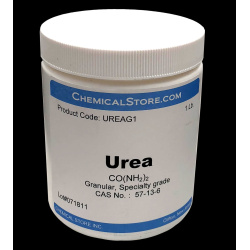
Urea, Carbamide, Granular, 99%
Urea, also known as Carbamide, is a high-purity, white granular compound with the chemical formula CO(NH₂)₂. It is widely used in agriculture as a fertilizer, in chemical industries for the production of resins, and in automobile industries for diesel exhaust fluid. In medical applications, urea is used in creams for rehydration of dry skin and treatment of conditions such as psoriasis, eczema, and keratosis. This versatile compound also serves as an animal feed additive and as a plastic and chemical intermediate.
Product Specifications
| Chemical Formula | CO(NH₂)₂ |
| CAS Number | 57-13-6 |
| Total Nitrogen | 46% Min |
| Conditioning Agent | 0.6% Max |
| Biuret | 1.5% Max |
| Moisture | 0.5% Max |
| Appearance | White granular substance |
Applications and Benefits:
- Agriculture: Fertilizer and nitrogen source
- Chemical: Production of resins and as an intermediate
- Automobile: Diesel exhaust fluid component
- Medical: Rehydration creams for dry skin and various skin conditions
- Animal feed: Nutritional additive
- Plastics: Raw material in production
Caution:
Store in a cool, dry place. Avoid inhalation of dust and direct contact with skin or eyes. Use appropriate protective equipment when handling.
- 1